While it’s fun to romanticise the idea of owning and caring for a horse, it is an immense responsibility that requires much time and money. If you are thinking of becoming a horse owner, consider the following responsibilities you will need to assume to ensure the animal’s well-being.
Daily Care Routine
Horses require a great deal of daily care to keep them happy and thriving, including meeting their daily nutritional needs and giving them opportunities for socialisation. A daily horse care routine should include the following.
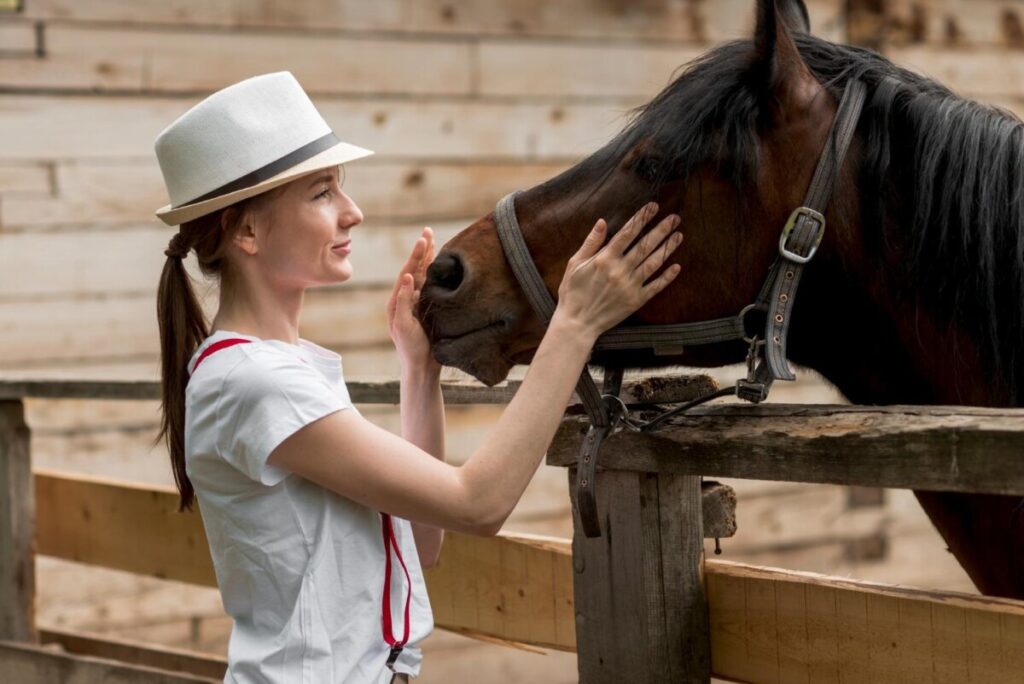
Feeding & Nutrition
Like people, horses require a well-balanced diet. Since the dietary needs of a horse will change throughout its life, it’s essential to speak with a vet or expert about the feeding needs of your horse at its age. While the specific needs will vary based on horse size and activity level, on average, horses need roughly 20 pounds of food daily (or about two per cent of their body weight in food). Food can consist of grain or roughage (such as pasture grass or hay), which provides the necessary balance of essential nutrients.
Horses have delicate digestive systems that require them to graze on small quantities of food throughout the day rather than large meals. Your horse should never be fed right before or after exercise, as its digestive system isn’t well-equipped to handle this. In addition, they need access to clean water throughout the day to aid digestion. Most horses need at least eight gallons of water each day.
Both food and water intake should be monitored to ensure the horse receives everything it needs to thrive. Changes in appetite may also signal that the horse may need medical attention.
Grooming
Horses are known for their stunning coats and flowing manes, and these require daily attention from horse carers to keep looking their best. Daily grooming is also essential for the horse’s health and cleanliness and can help strengthen the bond with your animal.
A typical daily grooming routine should include a mane comb, hoof pick, body brush, dandy brush, shampoo, and soft brush. Each comb and brush detangles hair and removes dirt that can irritate the horse’s skin, and each has a specific purpose. Grooming should be done before and after riding or exercising the horse. For hoof care, ensure a blacksmith trims and reshoes your horse every six to eight weeks.
Exercise & Training
Daily exercise and training can help maintain your horse’s mental and physical health. It also helps build stamina and strength while reducing injuries. A typical exercise and training routine comprises various forms of exercise, such as walking, running, and swimming. A racehorse’s routine may include strength-building work, such as walking or running through sand or water.
A proper routine will incorporate warm-up and cool-down periods to keep the horse’s muscles and joints safe and include stretching to improve a horse’s range of motion. These activities will vary based on the age and abilities of the horse. Rest periods are also crucial for a horse’s recovery and strength and should be included in the routine.
Turnout & Socialisation
‘Turnout’ refers to taking your horse out of its stall to pasture or exercise, and this is an essential daily practice for your horse’s well-being, even if it’s not a formal training day. It allows your animal to socialise with other horses, get fresh air, and engage in natural behaviours like grazing and wandering that are essential for its well-being.
Health & Medical Care
All horses require medical care to ensure they’re healthy, including regular check-ups, vaccinations, preventative care, injury prevention, and, in some cases, injury treatment or rehabilitation.
Regular Veterinary Check-Ups
Horses should have a general veterinary check-up every year; this should increase to twice a year for horses over the age of twenty. These check-ups will examine your horse’s overall health, from dental to hoof health. You should also get a veterinary check-up if you notice changes in your horse’s typical behaviours or eating habits.
Vaccinations & Preventative Care
Horses require various vaccinations to prevent them from contracting serious illnesses or spreading them to other horses they encounter. These vaccines protect against diseases like tetanus, encephalomyelitis, influenza, and rabies. Horses born to vaccinated mares begin their vaccine schedule at roughly six months old, while horses born to unvaccinated mares need to start vaccinations sooner. Once the initial vaccines have been administered, most vaccines require yearly boosters to maintain their effectiveness.
Horses are prone to many parasites, making parasite treatment and prevention essential to their medical care. Unless symptoms of a severe infection require immediate treatment, parasite treatment and prevention will be incorporated into the regular check-up.
Injury Prevention & Treatment
Most daily care practices, such as stretching and adequate rest periods, are primary injury prevention tools. When treating injuries, several interventions can relieve any discomfort your horse may be experiencing and help it recover. These interventions can include pain relief medications, cold hosing to reduce swelling and inflammation, ultrasound therapy, physiotherapy, and extended resting periods. The interventions used will vary based on your horse’s specific needs, and a veterinarian can help you identify the right course of action.
Stable Management
Maintaining your horse’s stable is an essential daily task to keep its environment clean and safe. A clean environment helps prevent the spread of disease, reduces unpleasant odours, and creates a comfortable environment for your animal. Stalls should be cleaned out twice daily, with fresh bedding added each time.
Dividing Responsibilities
With so many tasks and schedules to follow, caring for a horse is far more than a full-time job. It leaves little time for other essential activities in your life and even less for fun and entertainment, such as visiting casinos.com to get the top bonus offers or going on holiday. Because of this, most horse carers share the responsibility with others. This may involve dedicated roles for training, stall maintenance, and overseeing medical needs, dividing the workload to make it more manageable without sacrificing the quality of care your horse requires.
Conclusion
From daily grooming and exercise to yearly appointments and medical needs, there is a long list of requirements for adequately caring for a horse. Ensure you’re fully prepared for these responsibilities before bringing a horse into your life.
 The old adage, ‘If it sounds too good to be true, it probably is’ is not always correct but, in the summer of 1998, it certainly was. The previous year, Puerto Rican-born Angel Jacobs had begun riding work on Newmarket Heath and quickly attracted favourable attention for his accomplished, professional technique. Jacobs subsequently embarked on a career as an amateur jockey, riding his first winner, Bold Faith, trained by Willie Musson, in a lowly Class E handicap, restricted to gentleman amateur riders, at Newbury on June 11, 1998. All told, he rode five winners from 21 rides, at a strike rate of 24%, culminating in victory for Gymcrak Flyer, trained by Gordon Holmes, in a similar race at Beverley on August 13.
 Established on Cantley Common, Doncaster in 1776, at the suggestion of Lieutenant Colonel Anthony St. Leger, whose name it bears, the St. Leger Stakes is the oldest of the five British Classics. Of course, it is worth remembering that until 1966 the Jockey Club refused to issue training licences to women but, even so, in over half a century since womankind was officially recognised by the governing body, just one member of the ‘fair sex’ has saddled the winner of the St. Leger.
 It seems a long time ago, but in the mid 1990s Nick Mordin was very much a name of horse racing journalism, from research, data analysis, articles in leading publication to the author of popular racing books.